Trump says military could end its Iran offensive in 2 to 3 weeks
Trump hit out at allies for not backing the US war effort, telling them to “go get your own oil.”
PTI
.png)
-
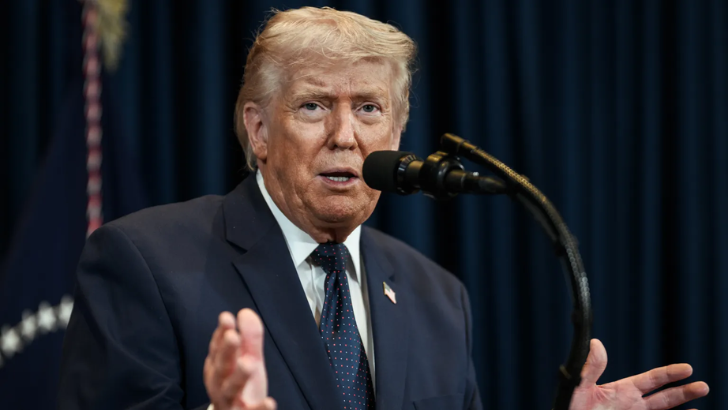
Donald Trump has alternated between claiming progress in Iran talks and warning of a wider military escalation (PTI)
Dubai, 1 April
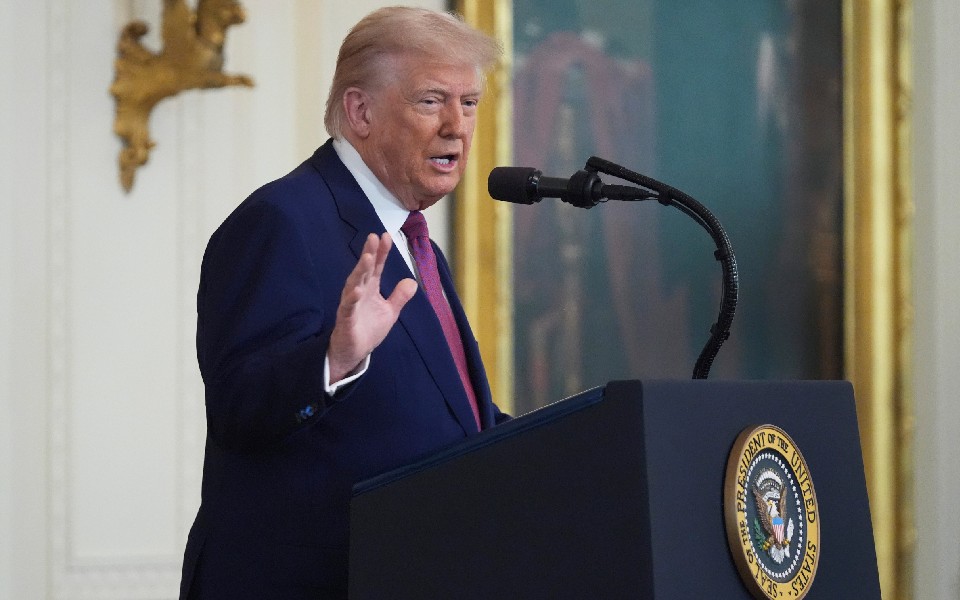
US President Donald Trump said the military could end its Iran offensive in two to three weeks and will shift responsibility for the Strait of Hormuz to countries that rely on it for oil and shipping, as the White House announced a prime-time presidential address on Wednesday evening on the war.
Trump expressed frustration Tuesday with allies who have been unwilling to do more to support the US war effort, telling them to “go get your own oil.”
Trump recently has vacillated between insisting there is progress in diplomatic talks with Iran and threatening to widen the war.
In an interview with pan-Arab broadcaster Al Jazeera, Iranian Foreign Minister Abbas Araghchi acknowledged receiving direct messages from US Mideast envoy Steve Witkoff. He insisted, however, that there were no direct negotiations and said Iran has no faith that talks with the US could yield any results, saying “the trust level is at zero.”
Trump said the US “will not have anything to do with” what happens next in the vital waterway that has been closed by the Islamic Republic. Instead, he told reporters, the responsibility for keeping the strait open will rest with countries that rely on it. Gulf states rely on the waterway for both exports and imports, including food, and 20 per cent of the world's oil supply flows through it.
US gas prices jumped past an average of USD 4 a gallon for the first time since 2022 on Tuesday, as the Iran war continues to push fuel prices higher worldwide. Analysts say those high fuel costs will trickle into groceries as businesses' transportation and packaging costs pile up.
UK to host Strait of Hormuz summit
Prime Minister Keir Starmer says the UK will host an international diplomatic conference this week on ways to reopen the Strait of Hormuz.
Starmer says 35 countries have signed a statement committing to work together on restoring maritime security to the key oil transport route.
He said Wednesday that Foreign Secretary Yvette Cooper will lead a conference on the issue, and military planners are also working on plans for security once the Iran war ends.
Starmer said “a united front of military strength and diplomatic activity” is needed to restore stability.
Drone attack hits northern Iraq fuel warehouse
Multiple drones attacked a northern Iraq fuel warehouse linked to British oil and natural gas giant BP, a firm operating the facility said.
No casualties were reported.
The attack on the motor oil warehouse occurred in Irbil, the capital city of Iraq's semiautonomous Kurdish region, the Sardar Group, a major automotive group in Iraq, said in a statement. It said the facility is owned by Castrol, a subsidiary of BP.
The statement said the first drone hit the facility at 7:20am, before it was attacked again with two more drones while firefighters were combating the fire.
The attack started a massive fire that sent a column of black smoke into the air, social media footage shows.
Lebanese military says it has withdrawn from border towns
The Lebanese military said its forces have largely withdrawn from some border towns as Israeli troops continue to push a ground invasion into the country.
The Lebanese military said in a statement that troops had to reposition to prevent being dispersed and cut off from support lines.
The military has gradually withdrawn from a handful of border towns. Remaining residents in the Christian-majority communities Rmeich and Ain Ebel have appealed to the Lebanese military and leadership to stay.
The military said it would maintain soldiers in those towns.
Israel has declared southern Lebanon up until the Litani River will be a “security-zone” in its ongoing war with the militant group Hezbollah and residents will not be able to return until further notice.
Over 1 million people in Lebanon have been displaced over the past month.
Australia urges use of public transport to conserve fuel
Australia Prime Minister Anthony Albanese used a rare national address to urge Australians to use public transport due to fuel supply uncertainties created by the Iran war.
Albanese said in a statement broadcast Wednesday by major television and radio networks that “the months ahead may not be easy.”
“You should go about your business and your life as normal. Enjoy your Easter,” Albanese said.
“And over the coming weeks, if you can switch to catching the train or bus or tram to work, do so,” he added.
Australia slashed fuel taxes from Wednesday in a bid to curb price rises at the pump.
The government maintains that Australia has all the fuel it needs, but panic buying and distribution problems have created regional shortages.
Iranian foreign minister signals willingness to keep fighting
Speaking to Al Jazeera, Iranian Foreign Minister Abbas Araghchi signalled Tehran's willingness to keep fighting no matter what Trump may threaten.
Trump's April 6 deadline for the Strait of Hormuz to open still stands, otherwise he threatened to hit power plants.
“You cannot speak to the people of Iran in the language of threats and deadlines,” Araghchi said.
Asked if the United States would launch a ground war in Iran, Araghchi dismissed the idea.
“I do not think they would dare to do such a thing,” he said. “Very heavy casualties would await them.”
Asked about attacks across the Gulf Arab states, Araghchi again insisted Iran isn't targeting those states, despite repeated attacks on civilian infrastructure like airports, power plants and desalination facilities.
“In reality, they are using the people of the Persian Gulf as human shields,” Araghchi said.
Oil falls below USD 100 per barrel
Oil fell below USD 100 per barrel and Asian shares jumped Wednesday over renewed optimism about a de-escalation of the Iran war.
Brent crude, the international standard, was down 4.7 per cent to USD 99.05 per barrel.
Benchmark US crude dropped 4 per cent to USD 97.33 a barrel.
South Korea's Kospi recovered its losses from earlier this week, surging 8.4 per cent to 5,478.70, while Tokyo's Nikkei 225 rose 5.2 per cent to 53,739.68.
Hong Kong's Hang Seng was up 2.3 per cent to 25,346.42, while the Shanghai Composite index was trading 1.5 per cent higher at 3,948.55.
Airstrike hits compound of former US Embassy in Iran
An airstrike in Iran's capital, Tehran, on Wednesday morning appears to have struck inside of the former US Embassy compound there.
The embassy has been controlled by Iran's Revolutionary Guard since the 1979 hostage crisis.
Its all-volunteer Basij force operates the compound, running an anti-American museum inside the embassy and having different operations on its grounds in newer buildings.
Witnesses saw blown-out windows surrounding the massive compound on Tehran's Taleghani Street. However, there was no missile strike visible around the compound, with witnesses saying they believe the strike happened inside the compound.
The 444-day hostage crisis saw American diplomats held until President Ronald Reagan took office from President Jimmy Carter in 1981.
Qatar says Iranian cruise missile strikes oil tanker off its coast
An oil tanker contracted to Qatar was struck by an Iranian cruise missile on Wednesday while two others were intercepted, authorities said.
The missile slammed into the tanker off Qatar's coast that is contracted by state-owned QatarEnergy. The ministry said the tanker's 21-member crew was evacuated, and no casualties were reported.
In a statement, the Defense Ministry said two other missiles were intercepted.
QatarEnergy said there was no environmental impact from the tanker attack.
The British military's United Kingdom Maritime Trade Operations center said earlier that a projectile slammed into the side of the ship.
Houthis say the fired missile barrage toward southern Israel
The Iranian-backed Houthis in Yemen said Wednesday they fired a barrage of ballistic missiles toward Israel.
Air raid sirens went off in southern Israel in the early morning, from Beersheba to the Mediterranean coast following the launch. There were no immediate reports of impacts.
Brig. Gen. Yahya Saree, a military spokesman for the Houthis, said in a prerecorded statement that they fired at “sensitive targets” in southern Israel.
The attack is the third since the Houthis joined the war on Friday when they fired their first missile towards Israel since the US and Israel launched massive airstrikes on Iran on 28 Feb.
Their entry has raised concerns that they could resume attacks on vessels in the Red Sea further disrupting the global shipping industry and sending oil prices much higher.
Share Now

Leave a Reply
Your email address will not be published. Required fields are marked *
Other Stories
.png)
.jpg)
.png)